Table of Contents Show
A 10-year-old boy sits in the back of a fourth-grade classroom. His file says he struggles with focus and emotional regulation. What his file does not say is that his household has not felt safe in three years.
Cleous “GloWry” Young would start there, at the body, not the behavior.
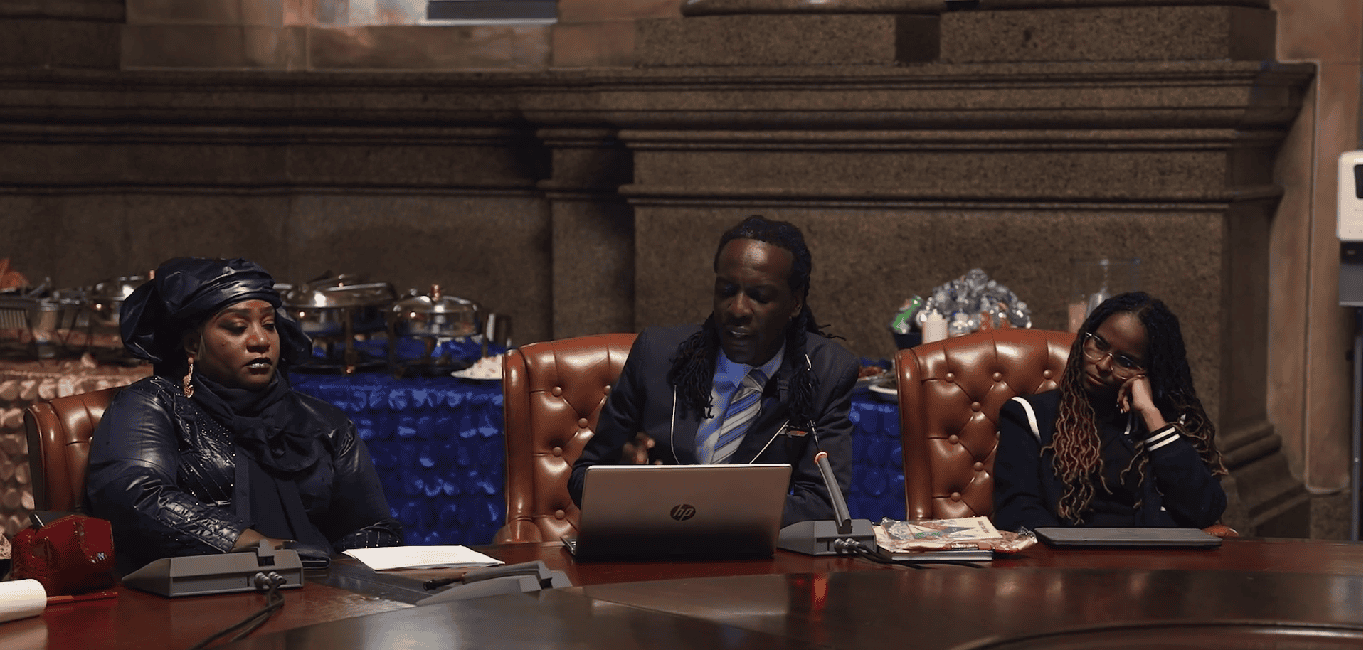
Young is the Philadelphia-based founder of The Airport Adventure and The TEB-IT Foundation, a nonprofit established in 2019 to address social and emotional challenges through the philosophy, principles, and procedures of the aviation industry. Over two decades as a behavioral therapist, teacher, and community educator, he built a framework that reorients how families, schools, and organizations understand why people struggle to learn, grow, and change. He calls it Organic Learning, and the first instrument it reads is the gut.
What Aviation Taught About the Body’s Built-In Learning System
Aviation trains pilots to read instruments before relying on instinct. Young noticed something else inside that logic: the instruments confirm what the body already registered before the gauge moves.
He applied that observation to children. When a child’s environment is unsafe, conflict at home, instability, chronic stress, the body’s organs shift into survival mode. The stomach tightens. The heart rate climbs. In that state, the prefrontal cortex, where reasoning and memory formation live, loses access to its full capacity.
“Our notion of labeling someone dumb and stupid because of learning difficulties was based on their organs’ functionality, and not their inability to learn or comprehend,” Young said.
Research published in Frontiers in Psychology found that chronic stress significantly impairs memory consolidation and executive function in children. Traditional education, he argues, measures output, test scores, reading levels, behavioral compliance, without first asking what is happening inside the child’s body.
LAPD: The Four Things the Body Already Knows How to Do
Young’s Organic Learning framework is built on what he calls LAPD: Learn, Adapt, Potential, Discover. These are organic functions built into every person’s sensory system from birth that activate or shut down based on whether the body feels safe.
“Our environment and the things that make up the environment are holistic learning tools, not just teachers, professors, instructors, or parents,” Young said.
He points to oral storytelling as evidence. Before written language, communities transferred knowledge through narrative that activated the gut, the heart, and memory, what Young calls the “heART.” Aviation runs the same way. A pilot’s training is not purely cognitive. It is physical repetition until the body responds before the mind decides. Children in unsafe environments undergo a parallel process, except what the body learns is how to survive, not how to grow.
When the Stage Becomes the Instrument Panel
Young’s theatrical productions, including The Bullying Effect and Being Safe, To2gether!!, are built on a specific insight: the gut responds to narrative the same way it responds to lived experience. A child who watches a character navigate peer isolation on stage builds a body-based memory reference. The lesson doesn’t sit in a notebook. It sits in the organ that registered the moment.
Young calls the method safertainment: safety education delivered through the emotional architecture of theater.
“It is imperative that the stage becomes a storytelling platform, in which the audience’s innate memory and imagination can be ignited,” Young said.
What Organic Learning Looks Like in Practice
For families, educators, and community organizations, The Airport Adventure’s model identifies clear starting points:
- Safety before instruction. When children feel safe, organs shift from survival mode to learning mode. Address the environment before addressing the grade.
- Gut feelings as data, not drama. A child reporting that “something feels wrong” is producing useful information. Teaching children to name and communicate gut responses builds self-awareness and situational awareness simultaneously.
- Narrative before rules. Children absorb behavioral frameworks through story faster than through direct instruction. A character making a choice on stage creates a mental reference the child draws on long after the curtain closes.
- Repetition at the community level. The TEB-IT Foundation hosts monthly events across the Philadelphia tri-state area with rotating themes, compound exposure by design, for the same reason pilots do not train once and stop.
A System, Not a Product
Young founded The TEB-IT Foundation in Philadelphia in 2019. Through The Airport Adventure Book-A-Zine, workshops, speaking engagements, and theatrical productions, the organization serves families, schools, churches, and nonprofits across Pennsylvania, Delaware, New Jersey, and New York.
Each resource in The Airport Adventure ecosystem connects to a system being built. The aviation industry safely transports 4.4 billion passengers annually because the training was designed around what the body already knows how to do. Young’s Project 5B carries that logic forward: reach five billion people by 2035 with a fundamentally different understanding of why people struggle to grow and change.
That boy in the back of the fourth-grade classroom is not broken. His body is doing exactly what it was built to do when it doesn’t feel safe. The question is whether anyone around him knows to start there.
Learn more at cleousyoung.com. The Airport Adventure and The TEB-IT Foundation offer workshops, speaking engagements, theatrical productions, and educational resources for families, schools, and community organizations.