Table of Contents Show
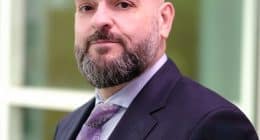
Dr. Ali Cadili is an emergency medicine surgeon. That means he lives in a world of high-stakes pressure where every decision has to be right. But his commitment isn’t just to the patients rushing into his trauma bay. It extends across the globe, fueled by a simple idea: his skills should go where they are needed most.
This is the story of how Dr. Cadili combined his surgical expertise with his business acumen to tackle healthcare inequality head-on. During one grueling mission, he and his team set out to deliver nearly 30 essential surgeries in just seven days. It’s a monumental win for patients who had absolutely no other hope of getting treatment.
The Architect of the Mission
Ali Cadili is not just a doctor; he’s a planner. It’s a skillset rooted in his education. He went beyond the medical degree to earn an MBA. As he’s explained, doctors spend years in the public hospital system, which doesn’t teach you how to run a private operation. His MBA gave him the organizational muscle to see the bigger picture.
That strategic mind is what makes his missions work. He’s the architect who handles everything off the operating table: securing funds, leading a large team of volunteers, and figuring out the complex logistics of building a fully functional surgical unit in a remote location. Even his private ventures, like establishing a focused aesthetic practice, are built on this principle of strategic niche specialization and surviving the market—qualities essential for mission success.
The Seven-Day Surgical Sprint
The mission, which took his team to Guatemala, wasn’t about high-tech procedures. It was about basic, life-changing care. They focused on operations like repairing hernias and removing gallbladders. In North America, these are routine; in these communities, a hernia can stop a farmer from working, crippling a family’s entire income.
The goal of 30 surgeries in one week established an exhausting pace. The team faced unfamiliar, stripped-down facilities and limited equipment. This intensity put his critical care background to the ultimate test, demanding unwavering calm and synchronized effort. It was a race against the clock, but one that promised profound returns.
Three Realizations from the Field
Working under those conditions offers lessons that change how a surgeon sees the world and their work. Here are three things that really sank in for Dr. Cadili on the global front lines:
- Stop Relying on the Tech: In a place with no high-tech monitors or fancy robots, you quickly realize what truly matters. It’s not the equipment; it’s the human training, the skill in your hands, and the judgment in your mind. The mission served as a powerful reminder to always rely on those fundamentals first.
- Urgency Is a Great Organizer: That hard, seven-day deadline wasn’t a punishment—it was a strategic advantage. Knowing they had a narrow window to serve 30 people eliminated all the usual stalling and indecision. The pressure created a hyper-focused environment that maximized productivity and ensured they didn’t waste a single moment.
- The Smallest Fixes Create the Deepest Impact: At the hospital, Dr. Cadili deals with the most severe trauma. On the mission, he saw the power of simple procedures. Fixing a basic hernia gave a parent the ability to provide for their children. It taught him that sometimes, the simplest operation that meets a core human need delivers the most profound, lasting change.
That’s a very important point. A story isn’t complete without knowing the lasting effects on the people involved and the final outcome. The article needs to show how those lessons came back home with him.
The Ripple Effect: Bringing the Mission Home
So, what happened when the team finally packed up?
Though the exact final tally of patients served remains a number shared amongst the exhausted, proud team, the mission was deemed a massive success. The goal of providing a high volume of life-changing procedures was met through relentless effort and strategic focus. They didn’t just perform surgery; they restored economic viability and reduced immense suffering for dozens of people.
But the most significant impact wasn’t left in Guatemala—it was carried back to the local Canadian hospitals. The experience sharpened Dr. Cadili and the other doctors involved in ways that textbook training cannot.
The intense pressure of working with scarce resources demanded extreme efficiency. Every incision had to be perfect, and every minute maximized. The doctors returned with a heightened sense of decisiveness and surgical economy. They became faster and less reliant on unnecessary steps.
The mission also reinforced the critical care mentality under non-critical care conditions. When Dr. Cadili is back in the trauma bay, the chaos of the emergency room feels manageable. He learned to simplify complicated processes in the mission field, and he brought that clarity of process back to the ICU, making him a more effective and decisive leader under high duress.
The lessons didn’t just sound good; they became new protocols. He applies the mission mindset to hospital logistics: how to eliminate wasted motion and ensure resources are dedicated only to what truly impacts the patient’s recovery.
Dr. Ali Cadili’s career demonstrates that the truest measure of a specialist is not just the complexity of the surgeries they perform, but their willingness to apply their expertise where it can make the most critical difference, one focused, life-changing mission at a time. The mission was a temporary assignment, but the mastery forged there is permanent.
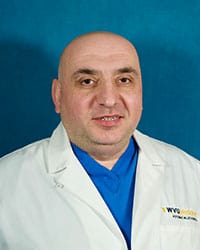
If you are interested in learning more about Dr. Ali Cadili’s surgical practice, research, or the strategic principles he applies to his humanitarian and business endeavors, you can find more information on his professional profile or follow him on his Facebook page.