
Table of Contents Show
Your dog doesn’t care that your new white sofa cost three thousand dollars. Your cat won’t think twice about using your antique Persian rug as a scratching post. When you’re designing a home that includes furry family members, you need strategies that keep both humans and pets happy without sacrificing style.
The good news? Pet-friendly design has evolved far beyond plastic furniture covers and industrial-grade everything. Today’s pet-conscious homeowners can create beautiful, sophisticated spaces that accommodate four-legged family members seamlessly. You just need to think strategically about materials, layouts, and functionality.
Fabric Choices That Work for Everyone
The fabric conversation starts with understanding your pet’s specific habits. Dogs that shed year-round need different considerations than cats who occasionally have hairball incidents. Older pets with mobility issues require different solutions than energetic puppies who haven’t mastered house training yet.
Performance fabrics are your best friend in pet households. These aren’t the stiff, uncomfortable options from decades past. Modern performance textiles feel luxurious while repelling stains, odors, and pet hair. Look for fabrics treated with nanotechnology that creates an invisible barrier against spills and accidents.
Leather and faux leather deserve serious consideration for pet owners. Most pet hair wipes right off leather surfaces, and cleanup from accidents becomes much simpler. Choose distressed or textured leather finishes that will camouflage the occasional scratch mark from excited claws.
Avoid fabrics with loose weaves or delicate fibers. Cats view bouclé and similar textures as giant scratching posts. Silk and other fine fabrics won’t survive pet ownership, no matter how well-behaved your animals are.
Color Psychology for Pet Parents
Dark colors hide pet hair better than light ones, but that doesn’t mean your entire home needs to look like a cave. The smartest approach involves matching your color choices to your pet’s coloring. If you have a golden retriever, medium browns and warm taupes will camouflage shedding better than stark white or deep black.
Patterns work beautifully in pet households because they break up visual space and make pet hair less noticeable. Subtle geometric patterns, textured solids, and organic prints all help disguise the inevitable fur tumbleweeds that appear between vacuum sessions.
Consider washable rugs in high-traffic areas where pets spend time. Many beautiful options now come in machine-washable versions, making cleanup from muddy paws or accidents much more manageable.
Flooring That Stands Up to Paws
Hard surface flooring generally works better for pet owners than wall-to-wall carpet. Luxury vinyl plank has become incredibly popular because it looks like hardwood but stands up to pet accidents, doesn’t show scratches as easily, and costs significantly less to replace if damage occurs.
If you love the warmth of carpet, consider carpet tiles in areas where pets spend time. Individual tiles can be replaced if accidents happen, rather than replacing entire room installations. Choose low-pile options that don’t trap pet hair and odors.
Real hardwood requires more consideration with pets. Softer woods like pine show scratches and dents more easily than harder species like oak or maple. Dark stains hide minor scratches better than light ones, but they also show dust and pet hair more readily.
Smart Storage Solutions for Pet Gear
Pet supplies can quickly overwhelm your carefully designed spaces if you don’t plan for storage. Food bowls, leashes, toys, and grooming supplies all need designated homes that keep your space organized while remaining accessible for daily use.
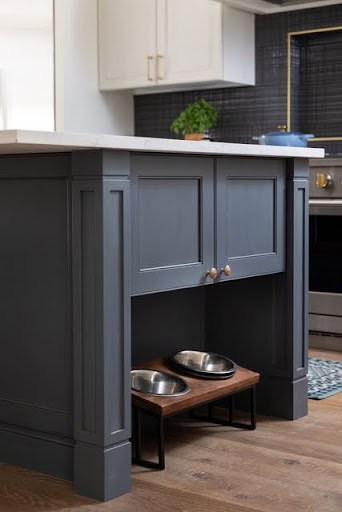
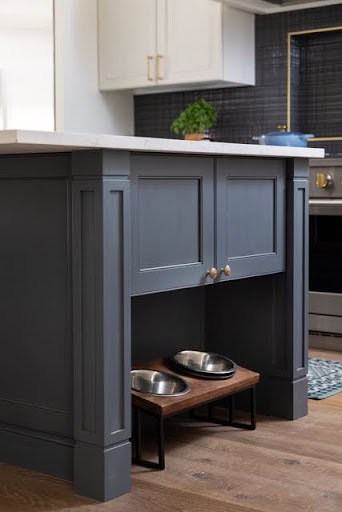
Built-in feeding stations work beautifully in mudrooms or kitchen areas. Raising food bowls off the floor in a designated cabinet alcove keeps the eating area tidy while providing storage for food containers and supplies underneath.
Consider furniture pieces that pull double duty. Ottoman storage benches near entryways can hold leashes and walking gear while providing seating for putting on shoes. Coffee tables with built-in storage keep pet toys organized but accessible.
Creating Pet Zones Without Sacrificing Style
Your pets need their own spaces within your home, but those areas don’t have to look like they belong in a kennel. Designate specific areas where pets are welcome to relax, sleep, and play without taking over your entire living space.
Dog beds and cat trees are functional necessities, but they don’t have to be eyesores. Many companies now make pet furniture that complements human design aesthetics. Look for options in materials and colors that coordinate with your existing decor.
Window perches for cats can be incorporated into built-in seating or shelving systems. Dogs often prefer floor-level beds in quiet corners where they can observe household activity while having their own retreat space.
Protecting Your Investment Pieces
Some furniture and decor items are worth protecting from pet access. Baby gates aren’t just for babies; they can keep pets out of formal living areas or away from delicate furnishings when you’re not home to supervise.
Furniture covers don’t have to be ugly. Many attractive throw blankets and covers can protect upholstery while adding texture and color to your rooms. Choose options that are easy to wash and replace as needed.
Consider the height of decorative objects and artwork. Cats who like to climb and dogs with enthusiastic tails need different considerations when you’re placing fragile or valuable items around your home.
At J Squared Home Designs, we understand that pets are family members who deserve consideration in every design decision. Our approach focuses on creating beautiful spaces that accommodate the realities of pet ownership while maintaining the sophisticated aesthetics our clients desire.
Ready to create a home that works beautifully for every member of your family? Visit www.j2homedesigns.com to explore how thoughtful design can keep both humans and fur babies happy.