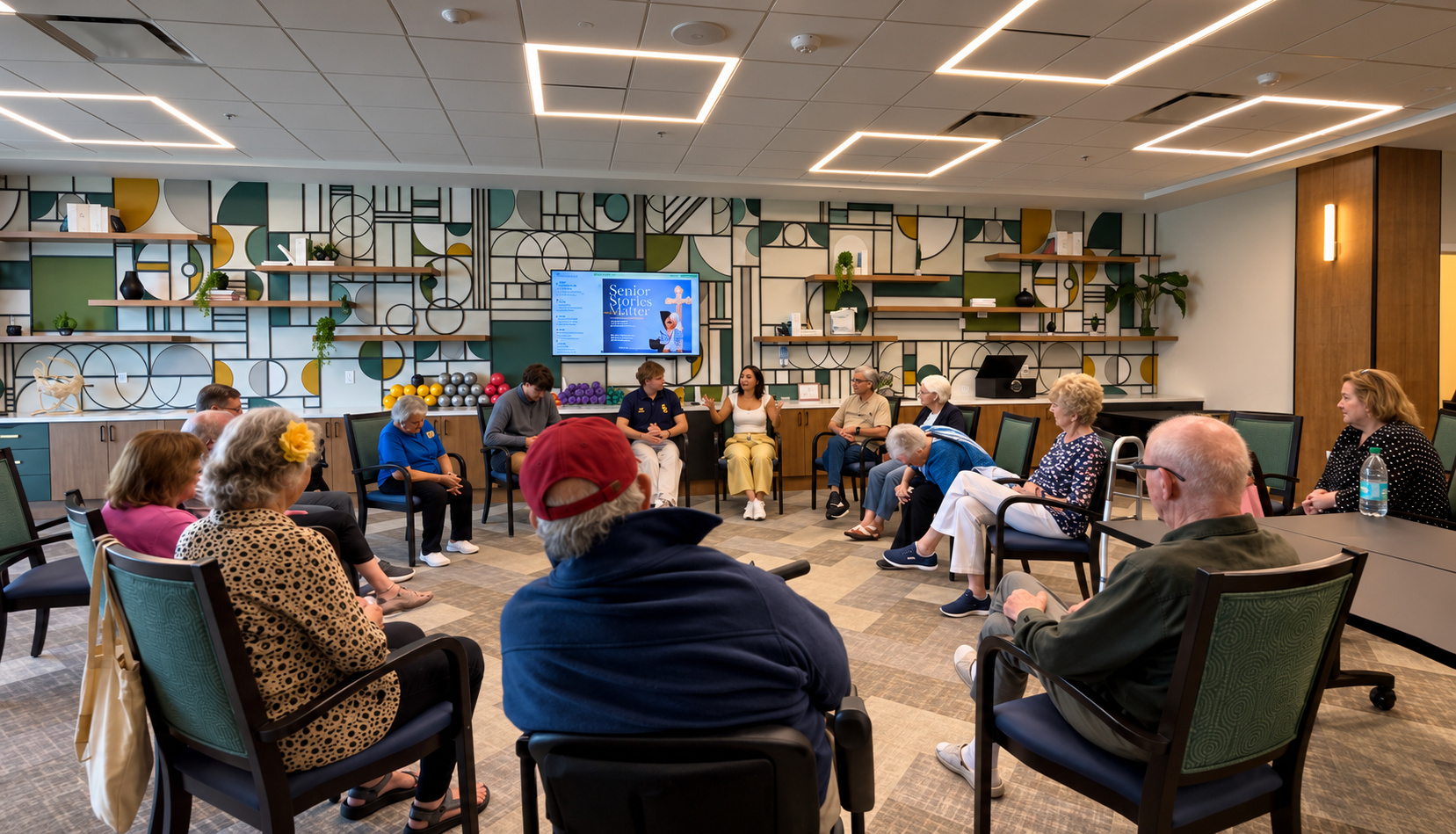

Maximillian Danner is the founder and lead facilitator of Defining Moments. He is also 17. The seniors who participate bring life experiences from decades before he was born.
That arrangement raises a useful leadership question: what does the person running a program contribute when so much of its knowledge belongs to the people taking part?
In the structure described in Defining Moments’ written materials, Danner and his fellow volunteers contribute prompts, exercises, preparation and facilitation. The seniors contribute their memories and their interpretations of the moments that shaped them.
Responsibility and experience sit in different places. The program depends on bringing them together.
A facilitator has a specific job
The Los Angeles initiative uses guided storytelling, improvisation and narrative reflection to connect older adults with high school students and college volunteers. Teen and college volunteers co-facilitate sessions and help participants shape their personal stories.
One exercise, the Connection Game, asks a participant to connect a word to an experience from their own life. Another asks seniors to name five things in a category as quickly as possible. Memory and vocal exercises also feature in sessions.
These are concrete responsibilities for a young leader: introduce an activity, explain the prompt and help the work move toward a story that can be shared. They offer a practical way to participate without needing to have lived through the experiences under discussion.
Danner’s own explanation acknowledges what he receives from the exchange. In the supplied materials, he says it is about spending time with older people who may have good advice and, through the Connection Game, hearing “snippets into what life was like in a time before I was born.”
He can therefore be the facilitator and a learner within the same activity. Those roles are compatible because they involve different contributions.
Leadership that carries through to a public result
The work extends beyond a conversation exercise. Twice a year, Defining Moments holds a public storytelling evening. Seniors are interviewed, supported in shaping their narratives and guided through rehearsal before sharing one defining experience onstage.
Photographs accompany the presentations, and speakers have an opportunity to answer audience questions. Families, friends, students and community residents are invited.
That sequence gives the facilitation a clear purpose. It connects the initial invitation to tell a story with preparation and an occasion on which others will listen.
It also makes the volunteers’ responsibility more specific than a general promise to “empower” someone. The described tasks include co-facilitating sessions, helping shape accounts and supporting rehearsal. Those are observable parts of the program’s design, even though the supplied materials do not provide an independent assessment of individual leadership outcomes.
The useful lesson is in that division of work. A young person can organize a setting in which an older person’s experience becomes the central resource. Leadership can involve recognizing where the knowledge sits and doing the preparation needed to make it available to others.
In Defining Moments, the person leading the exercise does not have to be the person with the most history to share.
Source note: This editorial analysis draws on written materials and statements supplied by Maximillian Danner’s team. The leadership observations are interpretations of the described program; quotations come from the supplied materials.