
Table of Contents Show
Most franchise operators open their first store with a business plan. The ones opening their second store within twelve months opened the first with something harder to manufacture: a genuine belief in what they were selling.
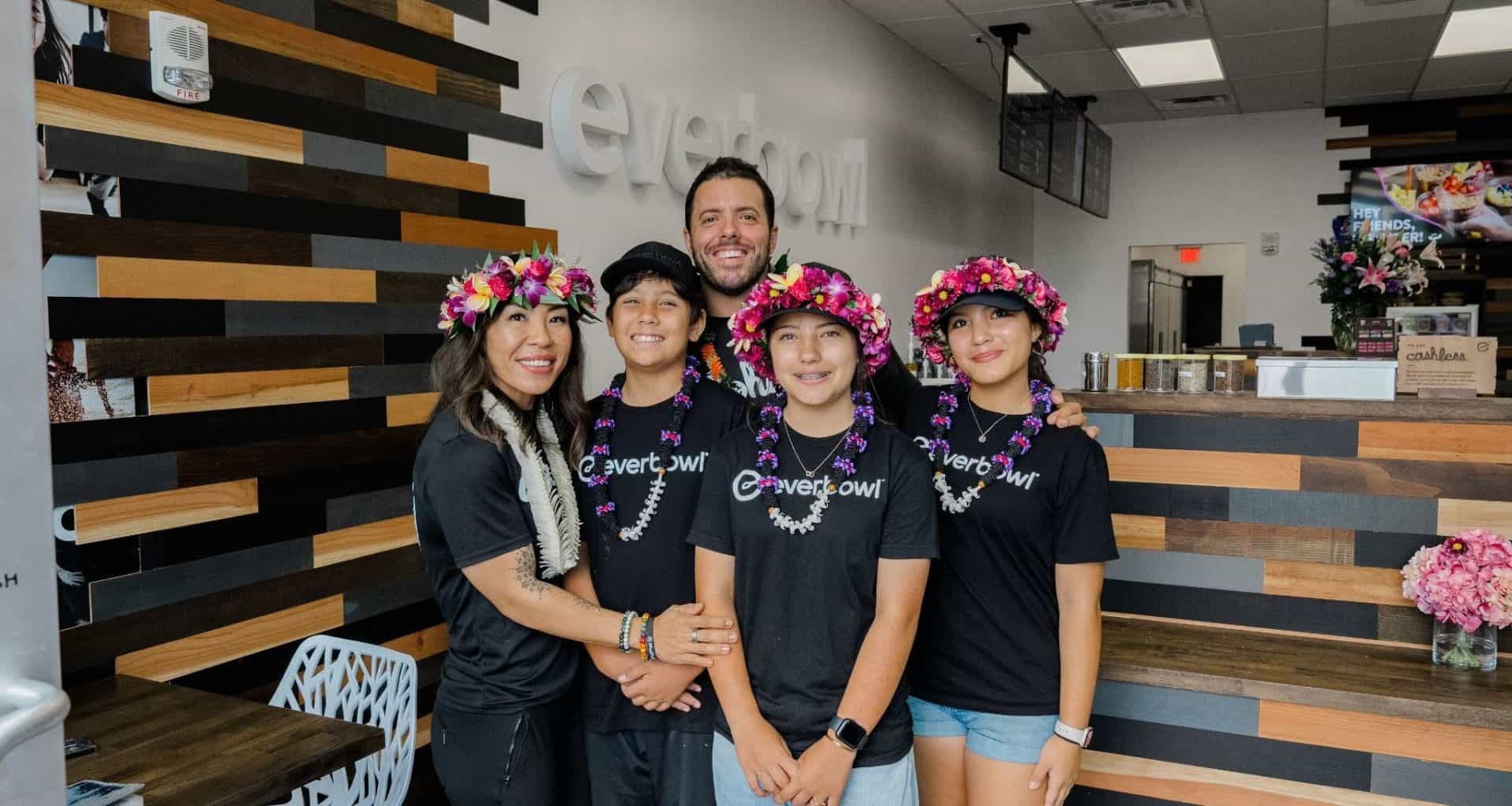
Brandon and Angela Padilla are local franchise owners operating everbowl’s O’ahu locations in Hawai’i. In 2025, they opened their first store on the island. Less than twelve months later, they are opening a second — the Pearl City location, which officially launched on May 1, 2026, following a Friends & Family preview event on April 30 that offered a free bowl to the first 300 guests. Angela’s mother was born and raised in Honolulu, giving the Padillas a personal stake in the market that goes beyond the franchise agreement. Brandon brings a background in IT support and engineering. Angela’s experience is in human resources and customer service.
That combination — personal roots, complementary professional skills, and a product they believed in as consumers before they believed in it as a business — follows a pattern serious operators can study and repeat. Call it the Conviction Operator Model.
Most Franchise Operators Pick Their Brand by the Spreadsheet
Franchise selection is typically a financial exercise. Prospective operators compare initial investment ranges, royalty structures, average unit volumes, and territory availability. Those are legitimate filters.
They are also insufficient on their own.
The operators who scale fastest share a common characteristic that no financial model captures: they were customers of the brand before they were operators of it. They had already tested the product under real conditions — not a site visit, not a discovery day, but years of personal use — before they ever signed a franchise agreement.
The Padillas were everbowl customers first. They knew the product worked for their family before they staked a business on it.
“As parents with busy schedules, we know how hard it can be to find food that’s quick, delicious, and consistent,” Brandon Padilla said. “We’ve been fans of the brand for years, and we believe in what makes it different.”
An onboarding script sounds rehearsed. That quote came from a parent who had been eating everbowl for years before he ever applied for a franchise.
Element One: Personal Conviction Before Business Conviction
The first element of the Conviction Operator Model is this: the operator must believe in the product as a user before they believe in it as a business.
This sounds obvious. In practice, most franchise operators skip it entirely.
When your primary filter is financial modeling, you end up running a business you are indifferent to. You are managing a system rather than building something you care about. That gap shows up in operational outcomes long before it shows up on the income statement.
Operators who genuinely believe in what they sell make different decisions under pressure. They hold the product standard higher because the standard is personal. They hire differently because the team represents something they care about. They stay in harder moments because the investment carries personal weight beyond the financial stake.
Operators with personal conviction run tighter shops. The belief in the product follows them into every decision they make.
The Padillas tested everbowl’s product across years of family use before they built a business on it. By the time they opened their first store, they already knew what the brand delivered because they had been on the receiving end of it.
Element Two: Complementary Skills Over Identical Experience
The second element: build the operating team around complementary skills. Matching backgrounds produce identical blind spots.
Most franchise partnerships fail because both partners are strong in the same area and blind in the same area. Two operators with identical sales backgrounds build great top-line revenue and collapse on operations. Two operators with identical finance backgrounds build tight systems and struggle to lead a team.
The Padilla model is different. Brandon’s background in IT support and engineering directly serves the operational and systems side of the business — inventory, efficiency, process design. Angela’s background in human resources and customer service shapes the culture and the guest experience — hiring, training, and how the team shows up every day.
Neither of those skill sets replaces the other. Each one makes the other more effective.
This is the structural reason their first year worked. The store ran well operationally because Brandon’s engineering instincts applied to franchise systems produce consistency. The team performed because Angela’s HR background treats staffing as a discipline, not an afterthought. The guest experience was strong because those two things reinforced each other.
When evaluating a franchise opportunity, the sharper question for a two-person partnership is this: do our skill sets cover each other’s blind spots?
Element Three: Values Alignment as a Non-Negotiable Filter
The third element: the brand’s operating values must match how the operator already lives.
This is where most franchise evaluation frameworks stop entirely. The financial model is visible. The royalty structure is in the FDD. The operating values of a brand are harder to quantify, so most prospective operators do not try.
The Padillas did not have that problem. everbowl operates around five stated values: Make Friends, Have Fun, Kaizen, Be Remarkable, and Have Integrity. Angela Padilla described them in direct terms.
“These are values we live by as a family, and we’re excited to bring them to our team and the Pearl City community,” she said.
When the brand’s values and the operator’s personal values are the same document, culture runs on autopilot. Both people are already living it.
This is why the Padillas’ team culture built quickly. They were not translating a corporate values statement into daily behavior. They were already living those values and simply extending them into the business context.
The Kaizen principle — continuous, incremental improvement compounded over time — is worth examining specifically. In an operational context, Kaizen means building the feedback loops that let the team surface and fix small problems before those problems compound. An operator who practices this genuinely will build a faster-improving business than one who treats it as a branding term.
Kaizen in Practice — What One Year Actually Built
A second location within twelve months took consistent execution to earn.
Opening a second franchise unit that fast requires the first location to be generating real revenue, the systems to be stable enough to replicate, and the operator to trust the brand enough to expand. The Padillas cleared all three.
That timeline is also a signal to prospective franchise operators about what values-aligned, conviction-first operations actually produce. The financial returns follow the operational consistency. The operational consistency follows the values. The values were there before the business.
everbowl itself provides the validation layer. Founded in San Diego in 2016 by entrepreneur Jeff Fenster, the brand has grown to over 100 locations nationwide. That scale represents ten years of the model proving itself across different operators and different markets. The Padillas’ O’ahu performance sits inside a larger data set that confirms the approach works.
What the Pearl City Opening Signals to Serious Operators
The Pearl City store is the Padillas’ second location, not their last.
“This location is just the beginning of what we hope to continue building,” Brandon Padilla said. “We’re incredibly grateful for the support we’ve received so far and can’t wait to welcome the Pearl City community into our new store.”
For operators watching this space, that statement is worth reading carefully. The Padillas entered a market with deep personal roots, applied a conviction-first selection process, built with complementary skills, and expanded within one year. That trajectory does not happen by accident.
The Conviction Operator Model runs in a specific order. Belief first. Complementary capability second. Values alignment third. The financial modeling comes after — positioned behind those three filters, not ahead of them.
The Pearl City location offers everbowl’s full menu of açaí bowls, toasts, smoothies, and other better-for-you options built on premium superfood ingredients including acai, pitaya, blue majic, mango, and cacao. Every bowl is fully customizable.
Frequently Asked Questions
What is values-driven franchise ownership and why does it matter? Values-driven franchise ownership means the operator selects and runs their franchise based on personal alignment with the brand’s operating principles, not only on financial projections. Operators who share the brand’s values personally make faster decisions, build stronger team cultures, and hold product standards higher because those standards are not abstract. Research on franchise performance consistently shows that operator conviction — measured by genuine belief in the brand’s product and mission — predicts long-term retention and expansion rates better than initial investment size or prior business experience.
How did Brandon and Angela Padilla choose everbowl as their franchise? Brandon and Angela Padilla chose everbowl after years of personal use as customers. As parents with demanding schedules, they had a specific need — fast, better-for-you food that was consistent — and everbowl addressed it. They were fans of the brand before they were operators of it. That personal conviction preceded the business decision. The Padillas are operating their second O’ahu location in Pearl City, which opened May 1, 2026, nearly twelve months after their first store launched.
What makes complementary skills important in a franchise partnership? Complementary skills in a franchise partnership mean each partner’s strengths cover the other’s gaps. When both partners are strong in the same area, the business runs one function well and struggles in others. Brandon Padilla’s background in IT support and engineering addresses operational systems and efficiency. Angela Padilla’s experience in human resources and customer service addresses team culture and guest experience. Those two domains reinforce each other rather than overlap, producing a more complete operation than either partner could build alone.
What is the Kaizen principle and how does it apply to franchise growth? Kaizen is a Japanese management philosophy centered on continuous, incremental improvement practiced consistently over time. In a franchise context, it means building regular processes to surface small operational problems before they compound, treating every failure as a data point rather than a blame event, and improving daily rather than waiting for a periodic overhaul. Operators who embed Kaizen as an actual practice — not just a values statement — build businesses that improve faster than their competitors. everbowl lists Kaizen as one of its five core operating values.
How can a prospective franchise operator evaluate values alignment before signing? A prospective franchise operator can evaluate values alignment by spending time at existing franchise locations as a customer before any formal introduction to the brand, asking current franchisees how they describe the brand’s culture to new hires, requesting the brand’s stated operating values and comparing them against personal decision-making principles, and identifying whether they can name a specific personal experience with the product that validates what the brand claims about itself. Values alignment that requires upkeep means the values never actually matched in the first place. The right franchise brand should feel like an extension of how the operator already operates.
The Conviction Operator Model in One Paragraph
The fastest path to a second location runs through the first one performing. The first one performs when the operator believes in the product, pairs complementary skills with a partner who fills their gaps, and chooses a brand whose values require no translation. Brandon and Angela Padilla did all three. Twelve months later, Pearl City has an everbowl.
For prospective franchise operators, that sequence is worth more than any earnings disclosure document. The financial model tells you what is possible. The conviction model tells you whether you will actually build it.
More information about everbowl’s franchise program is available at everbowl.com/acai-bowl-franchise.